
9 Important Types of Insulation
Housing options, including the opportunity to build your own house, are available in a wide range of types and designs, catering to various needs. With a plethora of existing homes available and the substantial expenses associated with constructing a new house, many prospective homeowners opt to purchase pre-existing properties. This decision is not unfavorable by any means, as most houses, including those built by individuals, boast durability that allows them to endure for decades, can be easily renovated, and possess the potential to appreciate in value over time.
Nevertheless, the idea of build your own house, through the employment of a general contractor for a new-construction project, holds an undeniable appeal. A newly built house, customized to meet the owner’s requirements, offers the advantage of minimal hidden issues, as hazardous materials like lead-based paint and asbestos are entirely absent. Instead, new features and conveniences can be seamlessly incorporated while leaving behind the problems typically associated with older homes. Given all other factors being equal, it is hardly surprising that most individuals would choose to build your own house rather than purchase an older property.
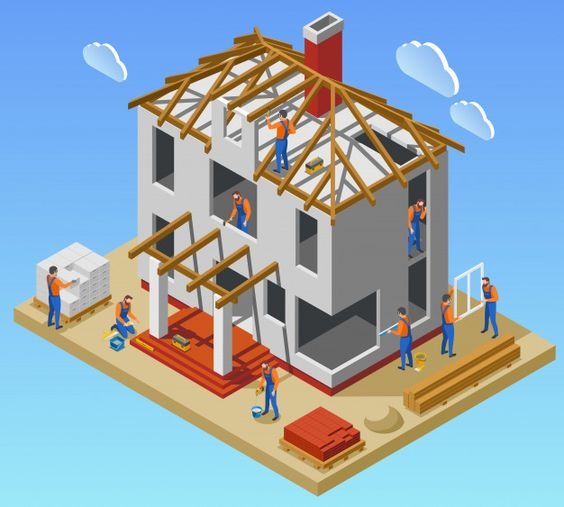
Is it advisable to assume the role of your own contractor?
When embarking on the journey of building your own home, it is generally recommended to engage the services of a licensed general contractor.
Although some states permit homeowners to build your own house and act as their own contractors, assuming the role of an owner-builder, this is typically more suitable for smaller projects like outbuildings or lower-cost structures. To undertake the significant undertaking of build your own house, such as constructing a house, you would need to apply for an owner-builder exemption and personally sign the building permit application.
However, when it comes to build your own house, Few have the qualifications and expertise to be their own general contractor (GC).
Building build your own house entails the intricate coordination of various aspects, including scheduling projects and subcontractors in the correct order while ensuring compliance with numerous municipal inspections and building codes. Additionally, having a reliable network of subcontractors who can deliver high-quality work is invaluable.
A general contractor is the professional responsible for managing all these aspects. However, their services come at a cost. Most general contractors charge a percentage, typically ranging from 10% to 20%, of the overall cost of the home build, which includes permits and materials. This fee is often considered worthwhile by novice home-builders, especially those who may have had previous unsuccessful experiences with general contracting.
Pros
- Achieve significant cost savings by reducing the overall expenses by 10 to 20 percent.
- Gain greater control over timing, particularly when dealing with a slow and open-ended construction project.
Cons
- Miss out on the general contractor’s network of subcontractors.
- Lack personal experience in dealing with the permitting office
- Not able to take advantage of wholesale discounts
- Have limited knowledge in coordinating the various steps involved
1. Prepare Home Site
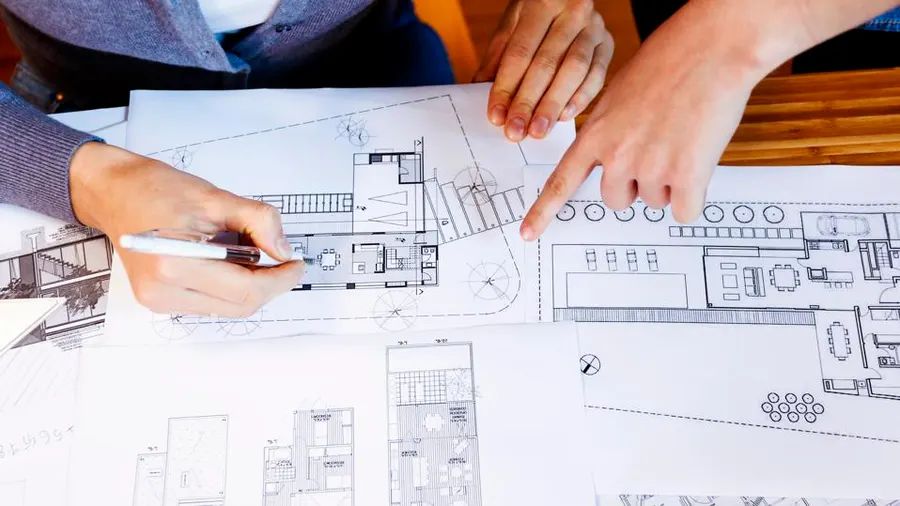
To begin with, it is essential to establish a firm foundation, both in the literal and figurative sense. This entails not only organizing and clarifying your project in your mind and documenting it on paper but also determining the precise location where your future home will be situated.
- Prepare the building site by thoroughly clearing away any brush or debris, ensuring that the ground is level and extending at least 25 feet around the planned perimeter of the house
- Engage the services of a land surveyor to accurately mark out the boundaries of the lot, utilizing the original plot drawings as a reference
- If required, modify the site’s topography to redirect water flow, a task that often necessitates hiring a contractor equipped with earth-moving machinery
- Arrange for a dumpster to be delivered to the site, providing a means to efficiently handle and dispose of waste materials throughout the construction process
- Secure one or more portable toilets to accommodate the needs of the workers during the project
- Arrange for the installation of temporary utilities through coordination with the local power company
- Enlist the services of an electrician to connect a temporary electrical panel, typically mounted on an existing utility pole
2. Construct Concrete Footings and Foundation
The building site starts to take form as the process of excavation and installation of foundations and slabs commences. This crucial work is carried out by specialized excavation contractors and foundation specialists, who are distinct from the carpentry crews that will be present at the site in the near future.
Footings and foundation constitute a significant portion of the overall cost of constructing your house. Consequently, substantial payment draws are typically made early in the project to cover these essential elements.
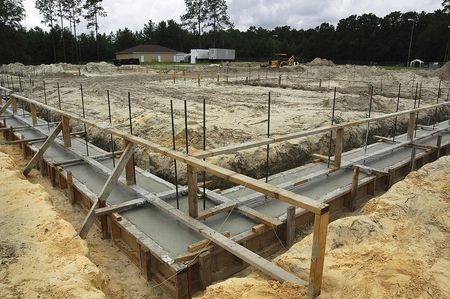
- The contractor excavates trenches that meet the required depth for frost footings, ensuring that the foundations are positioned below the anticipated frost line in your area. This precautionary measure is crucial for safeguarding your home against frost-heave damage
- Inspectors arrive on-site to carefully assess the dimensions of the footing trenches, ensuring compliance with the necessary specifications
- The contractor proceeds to pour concrete to create the footings, establishing a solid and stable base for the foundation
- Footing drains are installed to effectively redirect water away from the footers and provide protection against potential damage. These drainage systems are specifically designed for this purpose
- Using poured concrete or concrete cinder blocks, the contractor constructs vertical foundation walls that securely rest on the footings. Although other types of foundations may be employed on rare occasions, poured concrete or concrete cinder blocks are commonly used
- The entire foundation undergoes waterproofing measures, extending up to the finished grade level. In order to accommodate water supply and drain lines, openings or holes are created in the foundation wall, allowing for their proper installation and routing
3. Install Plumbing and Electrical
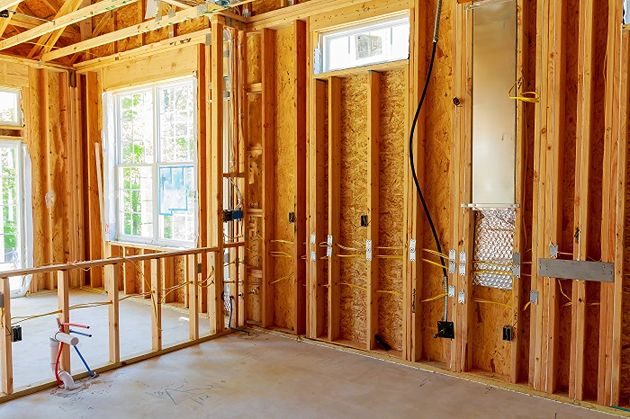
When opting for a slab-type foundation, it becomes necessary to coordinate with plumbers and electricians to complete certain preliminary tasks before the concrete slab is poured. Plumbing professionals will be called in to perform the rough-in process, which involves installing the necessary plumbing lines and fixtures that will be embedded within the slab. This includes plumbing connections for sinks, toilets, showers, and other water-related fixtures. Electricians will also be involved in the rough-in stage, ensuring that electrical wiring and outlets are properly positioned and secured before the concrete slab is poured. This includes establishing electrical connections for lights, switches, outlets, and any other electrical components required for the structure.
- Plumbers are responsible for installing pipes, which are subsequently concealed within the structure
- In the case of electrical lines that will pass through the concrete slab using metal conduits, this is the opportune moment for the placement of these conduits
4. Install the Concrete Slab
- To begin the process of constructing a house slab, the contractor initiates by installing slab foam board insulation.
- Over the foam board, a minimum of 4 inches of gravel base is laid, serving as the foundation for the concrete.
- Following the gravel base, a plastic vapor barrier is placed.
- Wire mesh reinforcement is then carefully positioned, ensuring that it is slightly elevated above the ground level. This positioning allows the reinforcement to be situated in the middle of the concrete layer, maximizing its strength-enhancing properties.
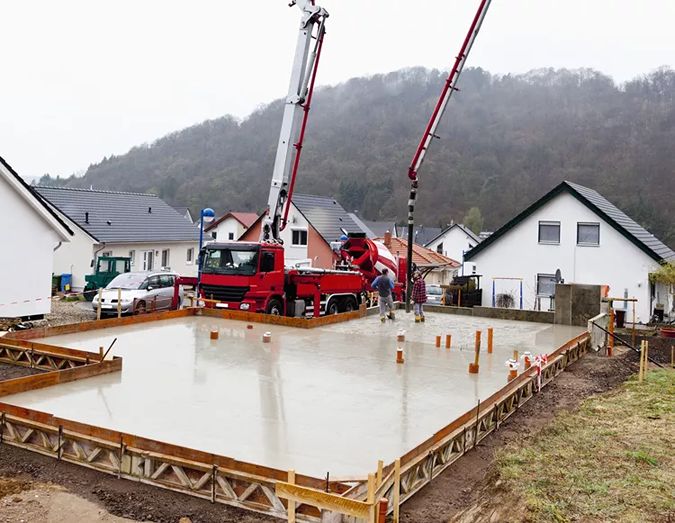
- The contractor proceeds to pour the concrete slab, often utilizing ready-mix trucks that deliver a substantial quantity of concrete.
- If there are plans to construct a garage or basement, this is also the opportune time to pour concrete in those areas. Since arranging for another concrete pour can be costly, it is advantageous to complete all concrete-related tasks simultaneously.
5. Frame, Side and Roof the House
After completing the excavation, foundation, and concrete work, your project will begin to take on the appearance of a house. The next step involves the arrival of skilled framing carpenters who will diligently construct the essential framework using lumber. They will meticulously assemble the framework for the floors, walls, and ceilings, ensuring the structural integrity of the house. Once the framing is complete, the carpenters will seamlessly transition to the installation of sheathing, siding, and roofing materials.
This phase of construction is known for its remarkable speed and efficiency. Within a relatively short span of one to two weeks, you will witness a remarkable transformation, as the structure rapidly evolves into a recognizable house, complete with sturdy walls and a protective roof. The skilled craftsmanship of the framing carpenters, combined with the precise installation of sheathing, siding, and roofing, brings the project closer to its final form.
As the lumber framework is erected, the skeletal structure provides a tangible representation of the rooms and spaces that will soon come to life. The carpenters’ expertise ensures that each component is precisely positioned, creating the necessary support and framework for the upcoming stages of construction. The installation of sheathing not only enhances the structural integrity but also serves as a base for the siding, which will provide the house with its distinctive exterior appearance.
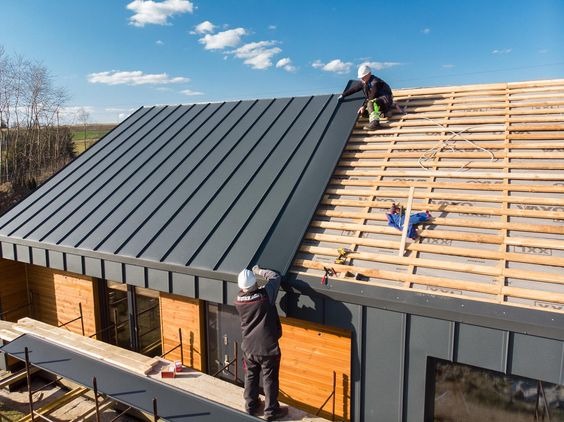
Lastly, the roofing installation takes place, carried out by experienced professionals dedicated to sealing the house against the elements. With meticulous attention to detail, they apply roof flashings and secure the final roofing materials, whether it is shingles or another preferred roofing surface. This significant milestone marks the completion of the basic shell of the house, bringing you closer to the realization of your dream home.
- Prepare a comprehensive framing order, taking into account the required lumber, nails, builder’s felt or house wrap, and adhesives, based on your building plans.
- Once favorable weather conditions arrive, the carpenter crew will arrive to commence the framing process. They will skillfully construct the walls, including the floor, ceiling, and roof skeleton, which form the basic shell of the house, excluding the siding and roof surface. During this stage, the rough openings for windows, doors, and skylights will be precisely framed. The basic sheathing of the wall and roof surfaces will conclude this phase.
- Proceed with the installation of windows, doors, and skylights. Typically, this task is carried out by the same carpentry crew responsible for the framing. However, in some cases, a crew from the manufacturer may be involved in this work. Alternatively, homeowners with the necessary skills may choose to tackle this job themselves. Once the building is sheathed, and the doors and windows are in place, the subcontractors responsible for electrical and plumbing work may arrive to initiate the rough-in phase of their tasks.
- Following the sheathing of the house, the finished siding surface is installed. Prior to this, the house sheathing is wrapped with a suitable weather guard membrane. This particular stage of work is often undertaken by the same contractor who handled the framing and sheathing.
- Finally, the roofers come in to complete the installation of roof flashings and the application of shingles or other desired finished roof surfaces. With this step, the basic shell of the house is now fully completed, providing a solid foundation for the remaining stages of construction.
6. Install Electrical, Plumbing, and Insulation
The interior phase of your house construction commences as a team of skilled professionals, including masons, electricians, plumbers, and HVAC specialists, enter the scene.
- Masons take charge of constructing the chimney, if your house design calls for one. This typically involves applying brick or stone veneer onto a concrete block base, expertly laid by the foundation contractor.
- Electricians and plumbers begin the rough-in work for electrical circuits, plumbing pipes, and HVAC system ductwork. This stage is more convenient to carry out without the presence of wall, flooring, and ceiling surfaces. Once these components are in place, the contractors will return to complete the final connections of various fixtures.
- Thorough inspections are conducted on the rough-in work to ensure compliance with regulations. The responsibility of obtaining permits and scheduling inspections lies with the contractor. However, if you have taken on this project independently, it becomes your responsibility to coordinate and facilitate the necessary inspections.
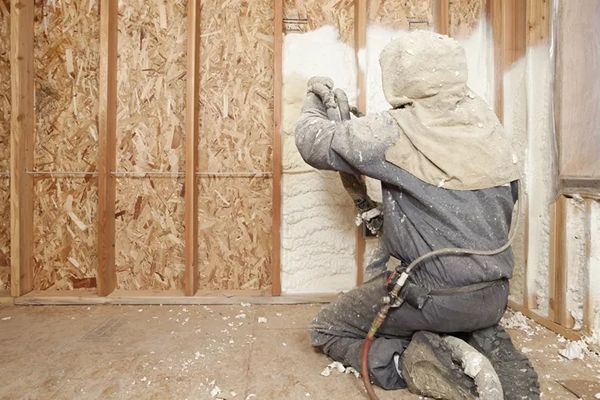
- The installation of insulation in the walls and attic is the next crucial step. In some cases, the carpentry crew may handle this task, but it is usually assigned to a specialized insulation contractor. Their expertise ensures proper insulation placement, contributing to energy efficiency and climate control within the house.
7. Hang Drywall
As the interior work progresses, the installation of wall and ceiling surfaces brings a sense of completion to the space.
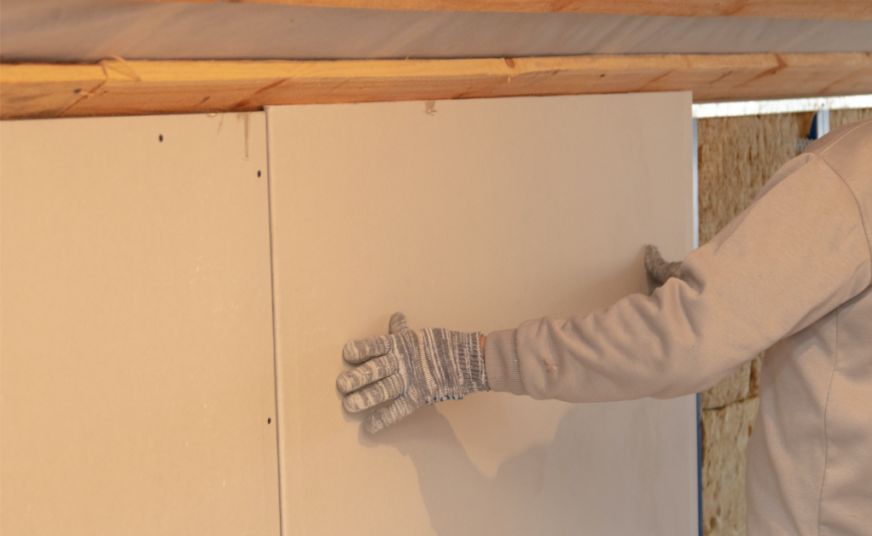
- Drywall is carefully mounted throughout the entire house, ensuring that all wall and ceiling surfaces are in place before proceeding with further tasks.
- The drywall seams are meticulously taped, followed by the application of joint compound and the process of finish sanding to achieve a smooth and seamless appearance.
- Priming is performed on all interior walls and ceilings, often accomplished swiftly using spraying equipment. This stage can be completed rapidly since there is no concern for trim moldings and floor surfaces at this point.
- The installation of trim moldings commences, including door and window casings as well as crown moldings, further enhancing the aesthetic appeal of the interior.
- The hanging of cabinetry takes place in bathrooms, kitchens, and other designated areas, providing functional and stylish storage solutions throughout the house.
8. Paint the Walls
Once the messy work of installing drywall and priming the walls is complete, it is time to bring in the painter to add the final touches.
- The walls are skillfully painted, and the ceilings are either painted or finished with texture. While homeowners can take on these tasks themselves to save money, it’s important to note that painting an entire house is a significant undertaking, especially for those accustomed to painting only a room or two.
- The installation of kitchen and bathroom countertops is carried out by specialized countertop experts who both fabricate and install these surfaces, ensuring a professional and precise fit.
- Dedicated companies supply and install the kitchen and bathroom cabinets, ensuring high-quality craftsmanship and seamless integration into the designated spaces.
- The installation and hook-up of completed electrical and plumbing fixtures are handled at this stage. Given the code requirements involved, it is advisable for only the most skilled do-it-yourselfers to tackle these tasks themselves.

9. Install Flooring
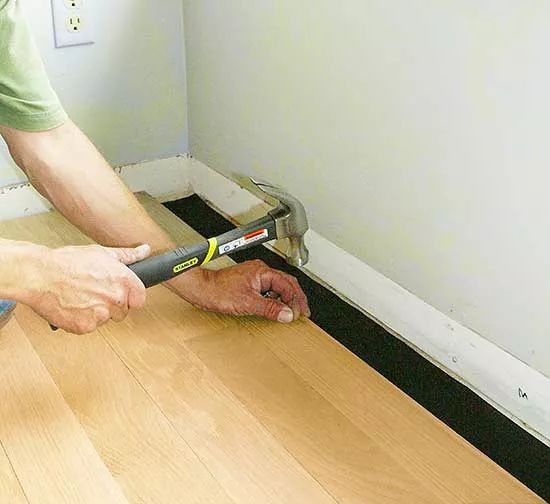
Proceed with the installation of the final flooring or floor covering throughout the entire house. There are various options to choose from, including carpeting, hardwood, laminate flooring, ceramic tile, luxury vinyl plank, and engineered wood flooring. Typically, this task is assigned to another specialized subcontractor, although homeowners may choose to undertake the installation of certain sections of the flooring themselves
Ensure the worksite is thoroughly cleaned by disposing of all permissible debris into the designated dumpster. The contractor will engage the services of a professional company specializing in post-construction cleanup to ensure the site is left in a pristine condition.
10. Matters of Building the Final Home
- Implement comprehensive outdoor landscaping. You have the option to tackle this as a DIY project to cut costs, or you can enlist the services of a landscaping company to handle the design and installation for you.
- Dispose of the dumpster: Contact the waste disposal company and request the removal of the dumpster, making it clear that you don’t require a replacement.
- Coordinate final inspections with the relevant permitting agencies.
- If you have employed a general contractor, schedule a final walk-through with them.
- If you financed the construction of your house through a construction loan, make arrangements for a final inspection with your lender.
Explore More

19 Apr
Landscape and Garden
Envisage Scapes
13 Gardening Tools for a Beautiful Landscape
24 May
Construction
Envisage Scapes
9 Important Types of Insulation
20 May
Construction
Envisage Scapes
How to Build a House in an Unchallenging Way

26 Apr
Interior Design
Envisage Scapes